Industry News2026/7/23
Full-Year Review of the Steel Market in H1 2026: Structural Divergence and Industry Transformation Amid Weak Supply-Demand Balance
The domestic steel market in the first half of 2026 remained in a state of weak supply and demand with a fragile balance. Driven by active cuts in crude steel output, declining real estate demand, manufacturing resilience supporting the floor, high coal and coking costs, and pressure on overseas exports, the market followed a pattern of "initial decline followed by recovery, then oscillating downward." The industry exhibited a clear structural divergence: strong flat products versus weak long products. Steel consumption by manufacturing has officially replaced construction as the core market driver, signaling a definitive shift from real estate-led growth to high-end manufacturing-driven transformation.
Drawing on authoritative data from the China Iron and Steel Association (CISA), General Administration of Customs, and Mysteel, this report reviews the first-half market across five dimensions—supply, demand, pricing, imports/exports, and chain profitability—and outlines key market logic and business opportunities for the second half, providing actionable insights for steel procurement, trading, and processing enterprises.
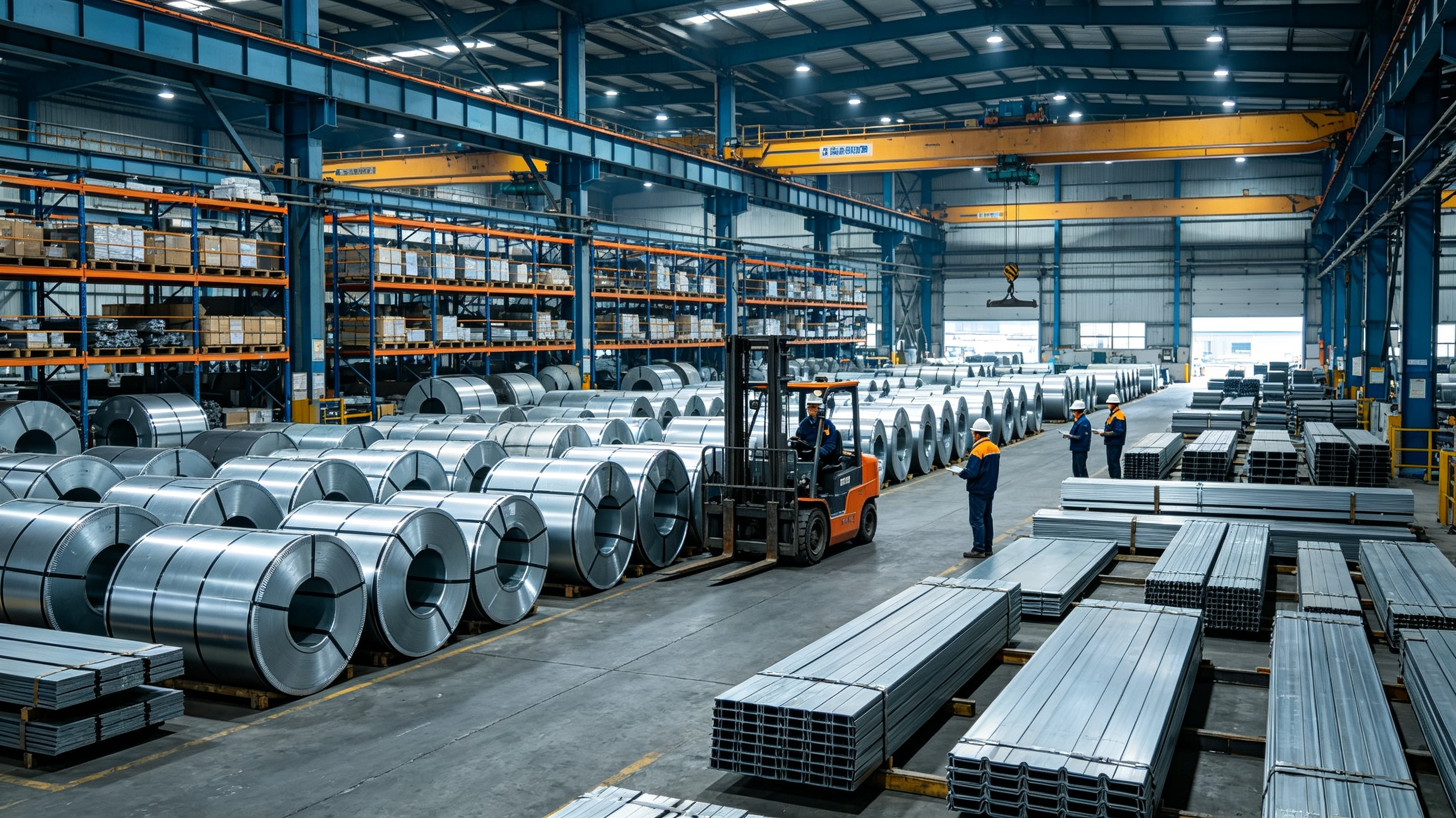
<p>1. Supply Side: Policy-Driven Production Controls and Loss-Induced Cuts Drive Orderly Supply Contraction</p><p>2026 marks the first year of concrete implementation for steel industry energy conservation and carbon reduction. The flat control of crude steel output has become the industry's core theme, compounded by deteriorating mill profitability, leading to a voluntary reduction in domestic steel supply during the first half of the year.</p><p>Data from the National Bureau of Statistics shows that from 1 to 6, cumulative crude steel production nationwide reached 4.9995 billion tons, down 3.0% year-over-year (YoY); pig iron was 4.27 billion tons, down 2.8% YoY; and steel products totaled 7.19 billion tons, down slightly by 0.9% YoY. Supply pressure eased significantly compared to the same period last year.</p><p>By phase, mills maintained routine production in Q1. In Q2, as coal and coke prices surged and finished product prices weakened, industry profits turned negative rapidly. Mills across multiple regions initiated blast furnace and rolling line maintenance, with cutbacks in building materials far exceeding those in plate products. By the end of 6, 14 mills nationwide had announced medium-to-long-term maintenance plans, further alleviating oversupply pressure in construction steel.</p><p>The raw material sector developed a divergent "loose iron ore, tight coking coal" pattern. Iron ore imports totaled 6.29 billion tons in H1, up 6.3% YoY, with port inventories persistently high above 1.6 billion tons, limiting upside potential for ore prices. Conversely, safety inspections on coal mines tightened coking coal and coke supplies. Coking coal prices rose 74% YoY, while coke prices jumped 57.3% YoY. Soaring fuel costs continued to squeeze mill margins, becoming the primary factor supporting steel price floors in H1.</p><p>2. Demand Side: Long Products Under Pressure; Plate Products Maintain High Resilience Across All Segments</p><p>The most critical change in the steel market this H1 was a complete restructuring of demand composition: manufacturing's share of steel consumption continued to rise, historically surpassing the construction sector, shifting market focus decisively toward plate products.</p><p>Building Materials: Real Estate Drag, Infrastructure Support Only, Weakening Annual Demand</p><p>Deep adjustment in the real estate sector remains the largest drag on building material demand. From 1 to 6, national real estate development investment fell 16.2% YoY, and new housing starts dropped 22.6% YoY. Weak cash flows among developers and insufficient site开工 led to a sharp decline in terminal demand for rebar and wire rod. Daily average trading volume of building materials in 20 key cities nationwide was 10.26 million tons in H1, down 16.4% YoY. Market demand relied solely on small-scale offsets from urban village renovation and affordable housing projects.</p><p>Infrastructure investment followed a "high early, low late" trajectory with slowing overall growth. Traditional road and bridge infrastructure added limited steel volumes, unable to offset the demand gap caused by real estate, causing a systemic downward shift in the annual demand baseline for building materials.</p><p>Plate Products: Resonance Across Multiple Industries Becomes Core Market Support</p><p>In stark contrast to building materials, demand for hot-rolled coils (HRC), heavy plates, cold-rolled sheets, galvanized sheets, and color-coated coils strengthened across the board. Data shows daily shipment volumes of HRC in key cities grew 11.3% YoY. The spread between coil and rebar prices widened continuously, demonstrating significantly better profit stability for plate products compared to long products.</p><p>High-growth downstream segments are clearly defined: Shipbuilding, offshore wind power, and heavy steel structures drove steady growth in heavy plate demand; excavator production in the machinery sector increased 24.2% YoY from 1 to 5 months, with general and special equipment manufacturing steadily releasing demand for hot coils; explosive growth in new energy vehicle exports boosted orders for high-strength cold-rolled and aluminized magnesium-zinc coated sheets; solar mounting structures, metal products, and the home appliance sector continued to support thin sheet and color-coated coil consumption. Manufacturing has become the core ballast stone for stable steel market operations.</p><p>Cumulative apparent crude steel consumption from 1 to 6 totaled 6.13 billion tons, a marginal YoY decline of only 0.6%. Domestic internal demand remained largely flat, with no overall collapse in total volume. Market divergence is the truest characteristic of H1 demand.</p><p>3. Prices and Inventory: Wide Swings Throughout the Year; Off-Season Inventory Buildup Pressures Emerge</p><p>H1 steel spot prices followed a three-stage trend:</p><p>At the start of the year, in 2, steel prices hit yearly lows due to the Spring Festival off-season and pessimistic real estate expectations. From 3 to 4, geopolitical conflicts pushed up energy and shipping costs, coupled with a recovery in manufacturing orders, driving plate prices to lead the market rebound. Between 5 and 6, sustained high temperatures and the rainy season in southern China hindered outdoor construction, reducing terminal purchasing willingness. Combined with weak cost pass-through from raw materials, prices peaked and then fell back, entering a low-level oscillation range.</p><p>Year-over-year price gains varied significantly by product: HRC rose 3.9%, heavy plates 3.4%, while rebar gained only 2.9%, highlighting the stronger defensive attributes of plate products.</p><p>Regarding inventory, market divergence was equally pronounced. Social and mill inventories for building materials accumulated simultaneously. Social rebar inventory in 39 cities increased by over 130 million tons YoY, extending the destocking cycle. Plate circulation inventories remained low, with traders普遍 adopting low-inventory, fast-turnover strategies. Speculative stockpiling has essentially disappeared, making market circulation more rational.</p><p>4. Imports and Exports: Total Export Volume Dips Slightly; Plate Products Show Outstanding Resilience</p><p>Customs data for H1 shows that from 1 to 6, cumulative domestic steel exports reached 5487.4 million tons, down 5.6% YoY; steel imports were 269.6 million tons, down 11.3% YoY, indicating rising domestic self-sufficiency rates.</p><p>Export structure showed clear divergence: Building materials like rebar and wire rod saw significant export contraction due to overseas trade protectionism and declining foreign real estate markets. Orders for HRC, heavy plates, specialty steels, and billets remained stable. Overseas manufacturing demand supported plate exports, partially offsetting the domestic shortfall in building material demand.</p><p>On the raw material import side, both iron ore and coking coal imports grew YoY, reflecting ample overseas resource supply and eliminating supply shortage risks in the raw material sector.</p><p>5. Industry Chain Profitability: Imbalanced Profits Between Upstream and Downstream Increase Pressure on Steel Enterprises</p><p>H1 saw severe imbalance in steel industry chain profit distribution: Upstream coal enterprises benefited greatly from rising coal and coke prices, improving profitability significantly. Midstream long-process mills faced double squeezing from high fuel costs and weak building material demand, leading to continuous profit erosion. From 1 to 4, industry total profits fell 51.5% YoY, with over half of the mills entering loss territory. Downstream steel trading and processing firms earned only thin margins, pushing the entire industry into a low-profit operating cycle.</p><p>In this context, mills proactively adjusted product structures, increasing capacity for high-value-added plate products such as cold-rolled, galvanized, aluminized magnesium-zinc coated, and premium heavy plates, while reducing inefficient building material output. Industrial structure optimization accelerated.</p><p>6. H1 Market Summary and Strategic Insights for H2</p><p>(I) Key H1 Market Conclusions</p><p>Supply Side: Policy controls + loss-induced cuts led to crude steel contraction and a rising share of plate capacity;</p><p>Demand Side: A "strong plates, weak long products" pattern solidified, with manufacturing replacing real estate as the core demand driver, placing long-term pressure on building materials;</p><p>Cost Side: Coking coal and coke remained at high levels while iron ore stayed loose, making costs the floor support for steel prices;</p><p>Industry Trend: The steel industry has officially entered a transformation cycle of "reducing volume, improving quality, and specializing in high-end plates." Traditional building material trading space is narrowing, while opportunities in plates, specialty steels, and anti-corrosion steels are emerging.</p><p>(II) Operational Guidance for Downstream Customers in H2</p><p>Purchasing Strategy: Expect price pressure during the hot off-season from 7 to 8. Procure based on actual needs and avoid large-scale stockpiling. The "Golden September" manufacturing peak in 9 may drive a temporary plate price recovery; consider locking in long-term plate contracts in advance.</p><p>Product Portfolio: Focus on manufacturing-grade materials including HRC, cold-rolled, galvanized, aluminized magnesium-zinc coated, and heavy plates. Moderate rebar and wire rod inventory levels.</p><p>Risk Warning: Fluctuations in coal/coke costs, overseas trade barriers, and slower-than-expected real estate recovery remain major downside factors for H2. Maintain a low-inventory, fast-turnover approach.</p><p>Long-Term Opportunities: High-growth sectors like new energy, wind power, engineering machinery, and new energy vehicles will continue to drive demand for high-end plates. Long-term demand for anti-corrosion color-coated sheets, high-strength steels, and specialty steels remains highly certain.</p><p>Conclusion</p><p>The structural divergence in the 2026 steel market is not a short-term fluctuation but a long-term signal of China's steel industry transformation. The era driven by real estate is gradually ending; high-end manufacturing, new energy, and export trade have become the new growth engines for the steel sector. Our company specializes in a full range of cold-rolled, galvanized, aluminized magnesium-zinc coated, color-coated, hot-rolled, and heavy plate products, complemented by one-stop services including direct mill supply, cutting/processing, and logistics. We closely track market structural changes, continuously optimize plate inventory and supply systems, and provide stable, cost-effective steel raw material support for engineering machinery, shipbuilding, new energy equipment, metal products, and steel structure enterprises. Moving forward, we will continue tracking monthly industry data, promptly releasing market analysis and procurement advice to help our partners precisely grasp market rhythms and mitigate operational risks.</p><p>Shanghai Biying International Trade Co., Ltd.</p><p>2026 Year, 7 Month</p>